How to Save Water at Home in Kelowna and the Okanagan

· 18 min read
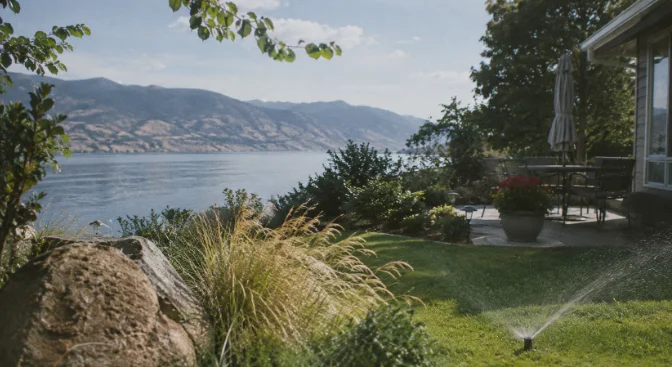
Living beside one of British Columbia’s largest lakes might give the impression that water conservation is less urgent here than elsewhere. Yet the Okanagan’s dry climate, growing communities and substantial summer irrigation demands make responsible water use particularly important.
For most households, saving water does not require expensive renovations or significant changes to daily life. Understanding your consumption, repairing hidden leaks and improving outdoor watering practices can make a measurable difference. The challenge is knowing which changes will deliver the greatest benefit for your particular home.
Why Water Conservation Matters in the Okanagan#
A Dry Climate With Seasonal Water Demand#
The Okanagan Valley receives relatively little precipitation compared with many coastal areas of British Columbia. Hot summers and extended dry periods create substantial demand for irrigation precisely when natural water supplies are under increasing seasonal pressure.
An update to the Okanagan Water Supply and Demand Study, conducted between 2015 and 2018, found that the average household in the valley used approximately 1,032 litres of water per day on an annual basis.
According to the Okanagan Basin Water Board, this included:
- 391 litres of daily indoor household consumption.
- 641 litres of daily outdoor household consumption, averaged across the year.
Outdoor activities accounted for approximately 62% of residential water consumption in the study. Because most irrigation occurs during the warmer months, actual summer demand can be considerably higher than these annual averages suggest.
The figures are historical rather than measurements of current household consumption, but they illustrate why outdoor water conservation remains such an important regional priority.
Where Kelowna’s Water Comes From#
Okanagan Lake is the principal drinking water source for the City of Kelowna Water Utility. Other local water systems draw from sources that may include upland reservoirs, creeks and groundwater.
Kelowna residents are served by four main water providers:
- City of Kelowna Water Utility.
- Black Mountain Irrigation District.
- Glenmore Ellison Improvement District.
- Rutland Waterworks District.
Each system has its own infrastructure, service area and operational requirements. Some properties in Southeast Kelowna also have access to a separate non-potable irrigation supply.
Knowing your provider matters because billing arrangements, conservation programs and certain watering rules depend on the system serving your address.
Despite the valley’s extensive freshwater resources, the amount of water that can be reliably collected, treated, stored and distributed is not unlimited. Snowpack, precipitation, reservoir levels, environmental flow requirements and infrastructure capacity all influence water availability.
Why Individual Households Make a Difference#
A single household reducing its summer irrigation by 1,000 litres per week may appear insignificant compared with the demands of an entire community.
However, if 10,000 households achieved the same reduction, the combined savings would amount to 10 million litres each week.
Reducing peak summer demand also helps utilities manage pressure within distribution systems, maintain reserves and provide water for essential services, including firefighting.
Household conservation is especially valuable when it targets unnecessary consumption rather than essential activities such as drinking, cooking and personal hygiene.
Start by Understanding Your Household Water Use#
Before replacing plumbing fixtures or redesigning your garden, establish how much water your property currently consumes. Without a reliable starting point, it is difficult to know which improvements are working.
Read Your Water Bill Before Making Changes#
Your utility bill is often the simplest source of consumption information. Look for the total volume of water used during the billing period, normally expressed in cubic metres.
One cubic metre equals 1,000 litres.
A basic household water audit starts with five steps:
- Collect several recent water bills, ideally covering both winter and summer.
- Record consumption in cubic metres and the number of days in each billing period.
- Calculate average daily household consumption.
- Identify activities that change throughout the year, particularly irrigation.
- Check your meter for unexplained water use when fixtures and appliances are switched off.
Where available, digital monitoring provides a more detailed picture. City of Kelowna Water Utility customers with compatible upgraded meters can use EyeOnWater to review consumption patterns and receive potential leak alerts.
If your home does not have an individual meter, appliance specifications and occasional measurements of fixture flow rates can still help identify opportunities for conservation.
Separate Indoor and Outdoor Consumption#
For many Okanagan homeowners, winter water consumption provides a useful approximate baseline for indoor use.
Consider a three-person household with the following consumption records:
| Billing period | Water consumption | Average daily consumption |
|---|---|---|
| January (30 days) | 15 m³ | 500 L |
| April (30 days) | 21 m³ | 700 L |
| July (30 days) | 45 m³ | 1,500 L |
| October (30 days) | 18 m³ | 600 L |
Assuming household occupancy and indoor routines remain similar, the July increase suggests that approximately 30 cubic metres of additional water may be associated with seasonal activities.
If the household reduces that estimated seasonal consumption by 25%, it could save approximately 7,500 litres over a comparable summer month.
This is an illustrative scenario rather than regional consumption data. It demonstrates why identifying the source of water demand is more useful than simply trying to reduce the total bill by a fixed percentage.
Compare Your Household With Relevant Benchmarks#
Comparing your meter readings with average household water consumption in Canada can provide a useful starting point, provided you account for household size and seasonal irrigation.
A detached home with a large garden should not necessarily consume the same amount of water as a two-bedroom apartment. Likewise, a household with young children may have different laundry requirements from a retired couple.
The most meaningful comparison is often between your own consumption records under similar conditions. Once you understand your household’s normal patterns, unusual increases become much easier to identify.
Find and Fix Water Waste Before Buying New Equipment#
Repairing unnecessary water loss should generally come before purchasing new appliances or installing expensive conservation equipment. A single continuous leak can undermine the savings achieved through numerous smaller changes.
Silent Toilet Leaks#
Toilets are a common source of hidden water waste because leaking water frequently flows directly into the bowl rather than onto the bathroom floor.
Add a few drops of food colouring to the toilet tank and wait approximately 15 minutes without flushing. If colour appears in the bowl, water is escaping from the tank.
A worn flapper or damaged valve seal may be responsible. In other cases, the fill valve allows water to flow into the overflow tube.
Even a relatively small leak of four litres per hour wastes 96 litres each day, or more than 35,000 litres if left unresolved for an entire year.
Checking every toilet periodically is particularly worthwhile in homes with guest bathrooms or rarely used basement facilities.
Irrigation Leaks and Overnight Water Use#
Underground irrigation pipes, damaged sprinkler heads and faulty valves can waste water without producing immediately obvious symptoms.
Look for persistently damp soil, unexpected puddles, uneven sprinkler pressure or patches of grass that appear unusually green compared with the surrounding lawn.
Digital water consumption records may also reveal unexplained overnight flow. Before assuming this indicates a leak, check whether an irrigation controller, water softener or other automatic appliance is operating.
A sprinkler controller that has been switched off does not necessarily stop water escaping through a damaged irrigation pipe or valve. Where possible, safely isolating the irrigation supply can help determine whether the problem is outdoors.
When a High Water Bill Needs Further Investigation#
If consumption remains elevated even when the irrigation system is switched off, finding hidden water leaks at home should be your next priority.
Start with toilets, accessible plumbing connections and automatic appliances before investigating underground pipes.
Contact a qualified plumber or irrigation contractor if you cannot identify the source. Where the problem may involve a service line or public water main, speak with your water provider to establish responsibility before arranging repairs.
Reduce Indoor Water Use Without Sacrificing Comfort#
Indoor conservation works best when improvements reduce unnecessary water use while preserving the convenience and functionality of your home.
Showers, Toilets and Bathroom Fixtures#
A showerhead is relatively inexpensive to replace, but the potential savings depend on the difference between the old and new flow rates.
Suppose your existing showerhead delivers 10 litres per minute and a replacement delivers seven litres per minute. During an eight-minute shower, the replacement would save 24 litres.
For three people each taking one such shower daily, the potential savings amount to approximately 2,160 litres over 30 days. There may also be energy savings because less water needs to be heated.
You can measure your current showerhead’s flow using a container and a timer. Collect water for 15 seconds, measure the volume and multiply the result by four to calculate litres per minute.
Toilet upgrades deserve similar consideration. Replacing an older 13-litre-per-flush toilet with a 4.8-litre model could produce considerable savings in a frequently used bathroom. Replacing a relatively modern six-litre toilet would achieve a smaller reduction.
Look for independently certified water-efficient fixtures and consider actual household usage before deciding whether replacement makes financial sense.
Laundry and Dishwashing#
Running appropriately sized loads is one of the simplest ways to reduce appliance-related water consumption.
Modern washing machines frequently adjust water levels according to load size, but the efficiency of individual cycles varies. Check your machine’s manual and avoid using intensive wash or extra-rinse settings when ordinary cycles are sufficient.
Similarly, scrape food residue from plates before loading the dishwasher rather than rinsing everything under a running tap.
When an appliance reaches the end of its useful life, compare water and energy consumption alongside the purchase price. ENERGY STAR certified washing machines and dishwashers can be useful options when evaluating replacement equipment.
Replacing a functioning, reasonably efficient appliance solely to save water may not be financially justified. Waiting until replacement is otherwise necessary can be a more practical approach.
Changes That Renters Can Make#
Renters have fewer opportunities to modify plumbing and landscaping, but they can still reduce daily water consumption.
Shorter showers, full laundry loads, sensible dishwasher use and promptly reporting leaks all help. Removable water-efficient showerheads or faucet aerators may also be suitable, subject to tenancy arrangements and any necessary permission.
If water charges are included in rent or strata fees, conservation may not produce an immediate reduction in your personal bill. Nevertheless, it reduces overall building consumption and pressure on local water infrastructure.
Report plumbing faults to your landlord or property manager rather than allowing a leak to continue simply because you do not pay the water bill directly.
Make Outdoor Watering More Efficient#
For many detached homes in the Okanagan, improving irrigation practices offers the greatest opportunity to reduce water consumption.
The objective is not necessarily to eliminate outdoor watering. It is to ensure that the water you apply reaches the plants that need it.
Measure Before You Change Your Irrigation Schedule#
Sprinkler systems differ considerably in how quickly they distribute water. Running every irrigation zone for the same number of minutes can result in uneven watering.
Rather than relying on a generic sprinkler schedule, start by calculating the right lawn watering time for your particular irrigation system.
A catch-can test can reveal how much water reaches different parts of the lawn during a timed watering cycle. The results provide a practical basis for adjusting individual irrigation zones.
The relationship between irrigation depth and volume is worth remembering: applying one millimetre of water across one square metre requires one litre.
Reducing unnecessary irrigation by five millimetres across a 200-square-metre lawn therefore saves 1,000 litres.
Over an extended summer watering season, modest weekly adjustments can accumulate into substantial savings.
Water According to Soil and Plant Needs#
Lawns, vegetable gardens, established trees and drought-tolerant shrubs have different moisture requirements.
Sandy soils tend to drain relatively quickly, while compacted or clay-rich soils may absorb water more slowly. Areas exposed to full afternoon sunshine often dry out faster than shaded garden beds.
Grouping plants with similar water requirements into separate irrigation zones makes it easier to provide appropriate amounts of moisture.
For flower beds, shrubs and vegetable gardens, properly designed drip irrigation can deliver water directly to the surrounding soil without unnecessarily wetting adjacent paths or lawn areas.
Established trees should also receive consideration during dry periods. Replacing a mature tree is generally more difficult and costly than restoring a small area of ornamental grass. Where restrictions permit, prioritizing long-lived landscape plants can make better use of limited irrigation water.
Reduce Water Loss Through Evaporation and Runoff#
Water during cooler periods of the day, within your provider’s permitted irrigation hours. Avoid allowing sprinklers to spray sidewalks, driveways, fences or buildings.
If water begins pooling before an irrigation cycle ends, consider splitting the operating time into shorter cycles with pauses between them. This gives the soil an opportunity to absorb moisture before additional water is applied.
Rain sensors, soil moisture sensors and weather-responsive irrigation controllers can help prevent unnecessary watering.
However, technology does not automatically guarantee efficiency. Controllers still need to be configured for the local climate, sprinkler output, soil conditions and current watering restrictions.
Replace Thirsty Landscaping Where It Makes Sense#
Maintaining a large lawn throughout a hot Okanagan summer requires considerable water. Yet not every part of a lawn necessarily serves a useful purpose.
Before removing turf entirely, consider which areas your household actually uses. A space for children to play may justify retaining grass, while a narrow ornamental strip beside the driveway might be better suited to drought-tolerant planting.
Xeriscaping focuses on creating landscapes adapted to local water availability. It does not require replacing everything with gravel or eliminating flowering plants.
The Make Water Work Plant Collection, developed with the Okanagan Xeriscape Association, provides examples of plants suited to the valley’s conditions.
New plants generally require additional watering while their roots become established. The greatest conservation benefits often emerge after the landscape has matured.
Which Water-Saving Improvements Are Worth Paying For?#
The most worthwhile investment depends on where your household currently uses water. A home with extensive irrigation has different priorities from a condo with no private outdoor space.
Use the following matrix to identify improvements that are likely to deliver meaningful results.
| Improvement | Upfront cost | Potential impact | Best suited to |
|---|---|---|---|
| Fixing existing leaks | Low to variable | High when leaks exist | All households |
| Adjusting irrigation schedules | Low | High for heavily irrigated properties | Detached homes |
| Installing efficient showerheads | Low | Moderate | Homes with inefficient fixtures |
| Replacing an inefficient toilet | Medium | Moderate to high | Older homes |
| Installing drip irrigation | Medium | Moderate to high | Gardeners |
| Reducing lawn area | Medium to high | Potentially high | Water-intensive yards |
| Upgrading irrigation controllers | Medium | Variable | Homes with automatic irrigation |
| Replacing an inefficient washing machine | High | Variable | Households replacing older appliances |
These are relative assessments rather than guaranteed savings or price estimates.
To calculate the potential financial return, multiply your estimated annual water savings in cubic metres by your applicable consumption rate.
For example, saving 40 m³ annually at an illustrative rate of C$2 per cubic metre would reduce consumption charges by approximately C$80 per year.
That calculation excludes fixed charges, possible wastewater savings and energy savings from reduced hot water use. It is not a quotation of current Kelowna water rates.
Tiered billing can also affect the calculation because reducing consumption may move some water use into a lower-priced tier.
Before purchasing irrigation equipment or drought-tolerant plants, check whether your provider offers conservation incentives. The City of Kelowna’s Water Smart program offers irrigation assessments and rebate opportunities for qualifying improvements, subject to current eligibility and program availability.
Follow the Watering Rules That Apply to Your Property#
Water conservation recommendations and mandatory watering restrictions serve different purposes. A lawn may benefit from a particular amount of irrigation, but that does not mean applying that amount is permitted during a drought.
Confirm your water provider and review its current restrictions before setting up seasonal irrigation schedules.
Pay attention to permitted watering days, operating hours, rules for automatic irrigation and any exemptions for specific activities. Restrictions can differ between Kelowna, West Kelowna, Lake Country and other Okanagan communities.
British Columbia’s provincial drought classifications also serve a different purpose from individual utilities’ watering restriction stages. Do not assume that a provincial drought level corresponds directly to a particular municipal watering schedule.
When restrictions tighten, adjust your landscape priorities accordingly. If lawn watering is prohibited, suspend it rather than attempting to maintain an ordinary summer irrigation target.
Think Beyond the Water That Comes Out of Your Tap#
Direct and Indirect Water Use#
Your water meter records the water delivered through your household supply. It does not capture all the water associated with your everyday consumption of goods and services.
Direct water use includes showering, cooking, cleaning and gardening. Indirect water use occurs elsewhere, during activities such as growing food, manufacturing products and generating electricity.
Environment and Climate Change Canada monitors freshwater use across several economic sectors, including agriculture, manufacturing, electricity generation and residential consumption.
Understanding indirect water use helps explain why household consumption records provide only one part of the broader water footprint.
Everyday Choices With a Less Visible Water Footprint#
Reducing food waste, maintaining household equipment and extending the useful life of clothing and electronics can help reduce demand for resource-intensive production.
The environmental benefit depends on how and where products are manufactured. Water used in a region experiencing severe scarcity may have different consequences from the same volume used where freshwater is more readily available.
Digital services are another example of resource use that rarely appears on a household water bill. Understanding the hidden water footprint of digital life helps put these less visible demands into perspective.
Indirect conservation complements local water-saving efforts, but it does not replace them. Reducing unnecessary irrigation in Kelowna has a more immediate and measurable effect on local water demand than changes to consumption elsewhere.
A Seasonal Water Conservation Plan for Okanagan Homes#
Water conservation is easier to maintain when it follows the natural rhythm of the year.
Spring: March to May#
Inspect irrigation pipes, valves and sprinkler heads before beginning regular watering. Repair winter damage, check sprinkler coverage and remove unnecessary watering schedules carried over from the previous year.
Spring is also a suitable time to plan drought-tolerant landscaping and investigate available conservation rebates.
Summer: June to August#
Monitor consumption more frequently as outdoor demand increases.
Adjust irrigation according to rainfall, soil moisture, plant requirements and current watering restrictions. Investigate unexpected consumption spikes rather than assuming they are an unavoidable consequence of hot weather.
Consider allowing established ornamental lawns to become dormant where appropriate instead of maintaining deep green turf throughout the driest months.
Autumn: September to November#
Gradually reduce irrigation as temperatures decline and plant growth slows.
Prepare outdoor plumbing and irrigation equipment for freezing conditions. Proper winterization can prevent damage that might otherwise cause significant leaks when watering resumes in spring.
Review summer consumption to identify whether your conservation measures delivered the expected results.
Winter: December to February#
With most outdoor watering suspended, winter provides an opportunity to examine indoor consumption.
Check toilets for silent leaks, measure showerhead flow rates and review appliance efficiency. Identify potential upgrades before the next irrigation season rather than waiting until summer demand is already high.
Build a Water-Saving Plan That Fits Your Household#
An effective conservation plan does not need to involve every possible water-saving measure. Start with your actual consumption and concentrate on the areas where improvements are most likely to make a difference.
For an apartment or condo, the priority may be bathroom fixtures and leak prevention. For a detached home with an extensive lawn, irrigation scheduling and landscape design may offer considerably greater savings. For an older property, repairing inefficient or damaged plumbing could be the most worthwhile first investment.
Choose two or three practical changes, record your starting consumption and review the results during the next comparable billing period. Account for rainfall, household occupancy and seasonal activities before drawing conclusions.
Water conservation in the Okanagan is not about using as little water as possible regardless of circumstances. It is about using the water you genuinely need, avoiding preventable waste and making sure the valley’s shared resources remain available for the households, businesses, farms and natural environments that depend on them.